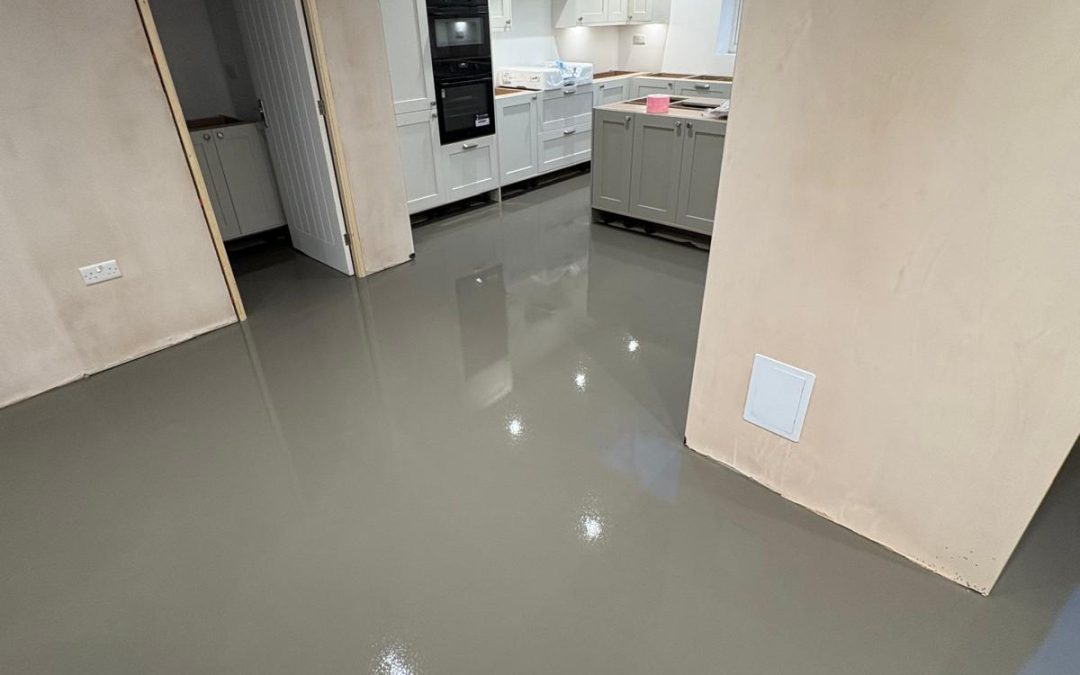
If we work on the basis that all Lvt’s are between 2mm – 3mm thick & are glued down, this puts a lot of onus in the subfloor preparation, if your prep is poor your final job is poor. So here’s a general view on preparation needed.
Wooden subfloors
- If you have a wooden subfloor either chipboard or floorboards that are flat it will need a 6mm plywood.
- If your floor isn’t great a 9mm plywood would be recommended.
Concrete subfloors
- Smooth / flat / dry concrete screeds would need priming before a high-quality latex screed is applied. Normally the depth of latex is about 4-6mm.
- More uneven screeds will just need a thicker latex.
- Damp floors would need treating with a paint on Damp proof Membrane. There is no way a Lvt should be fitted on a damp floor!!!
- After all the above we always use feather finish, this is a dual purpose as not only does it smooth the floor further but it also creates a barrier to stop the adhesive from soaking into the base, so, if you do need to repair / replace a tile you may only pull up the feather finish not the base with it. ( Not guaranteed )
To achieve the best finish we feel it’s always better to fit directly into the skirting’s, some fitters may prefer the skirting’s to be off, this only to make it easier for them, if the skirting’s are on, yes it’s harder for the fitter but it’s a better finish for the customer, surely that’s what it’s all about. You don’t need unsightly silicone if it’s fitted properly, although I would advise sealant in wet areas